

Case Snapshot
Product: E-commerce site for Numu Market, an organic grocery store focused on strengthening local producers in Mexico City
Role: UX researcher & product strategist
Timeline: 1 month- First Stage of ongoing optimization project
Team: 1 software engineer, 1 UX/Product designer and strategist, 1 PM
Platform: Web E-commerce (Odoo ERP) 
Users: Existing in-store customers and potential online shoppers that fit a conscious consumer profile

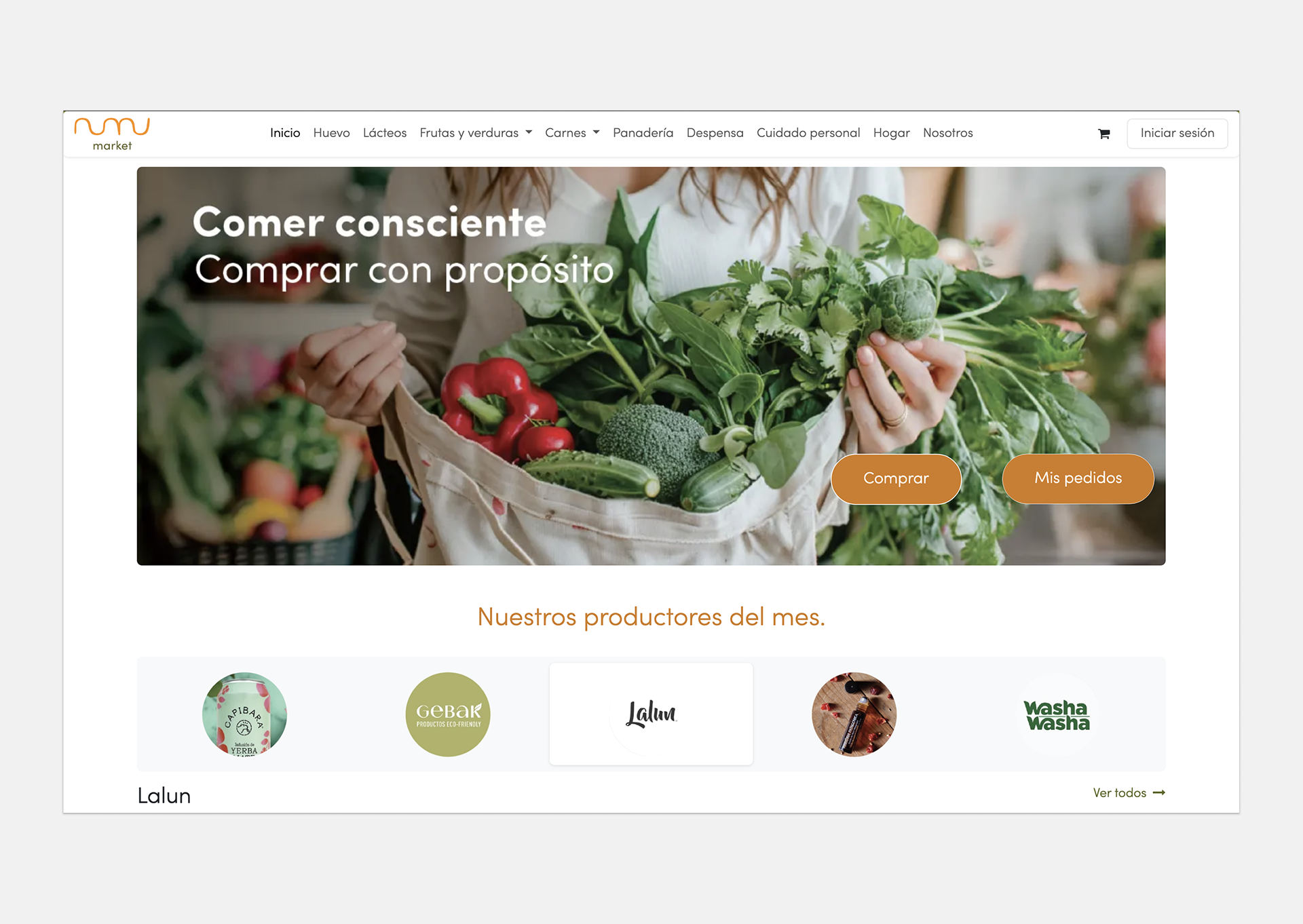
Landing page hero image communicating the main value of Numu Market through its heading: "Eating Consciously Buying with purpose". Local producers of the month are showcased in the carrousel below to highlight favorite brands.
Challenge: Numu's e-commerce platform had insufficient traffic  and negligible online sales due to a lack of user capturing strategy and user first focused experience. 
Outcome: Implemented targeted UX and offer changes that resulted in a +219% increase in online sales within one month.
Product lens: This project influenced the roadmap by setting a solid foundation and a guiding strategy to enable scaling of Numu's online sales channel and increase revenue in a channel that can capture more clients in a more efficient way than just relying on their brick and mortar store. 
Problem & why it mattered
Context:
Numu Market was in an early startup phase, where most initiatives were still being built and validated. In this context, resource allocation and prioritization were critical, and the concept of an MVP carried even greater weight. While the physical store performed well, the e-commerce site had near-zero impact on revenue. This was a major risk, as the web channel is essential for:
1. Reaching customers beyond the physical location
2. Scaling the business efficiently
3. Supporting long-term growth
From a UX and product perspective, the lack of online conversions indicated a structural problem that could not be ignored.
Success Metrics:
Business
• Online sales volume
• Average ticket price increase
• Conversion rate
Users: 
• Task completion of purchase flows
• Points of friction- moments in the flow users couldn't continue smoothly and  experience was hindered or broke down
​​​​

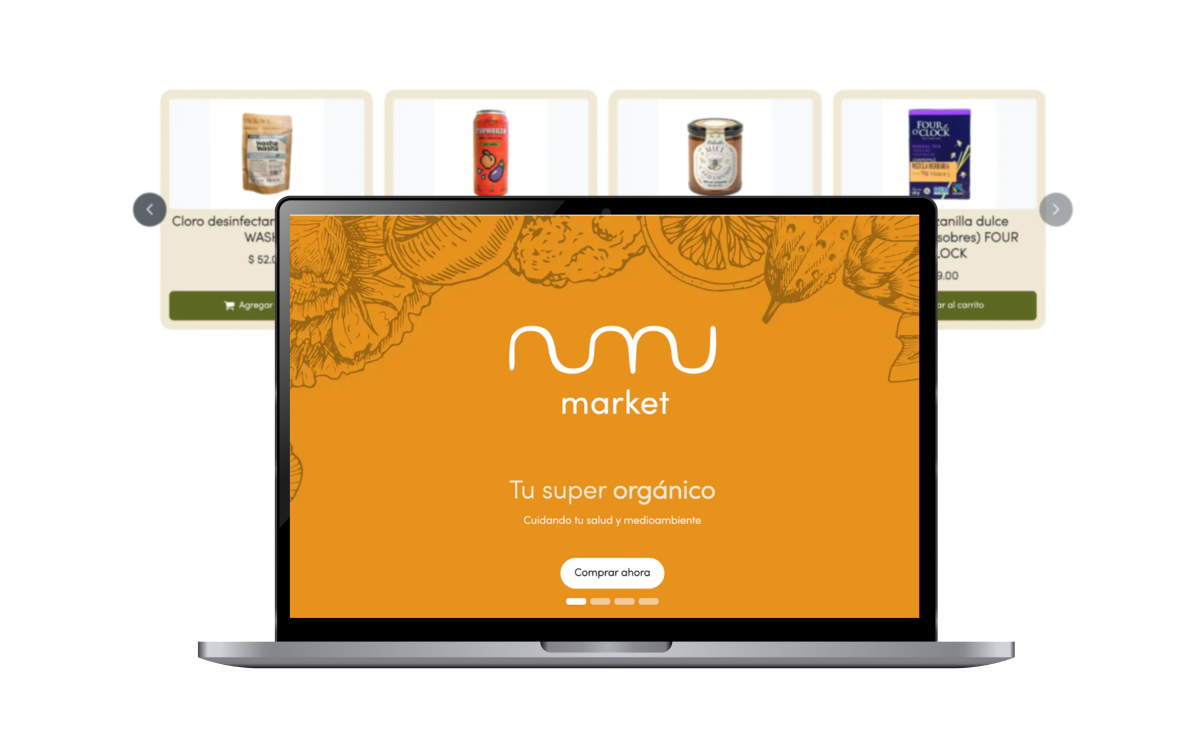
1. Ecommerce landing page before any usability research and redesign was implemented. (Desktop)
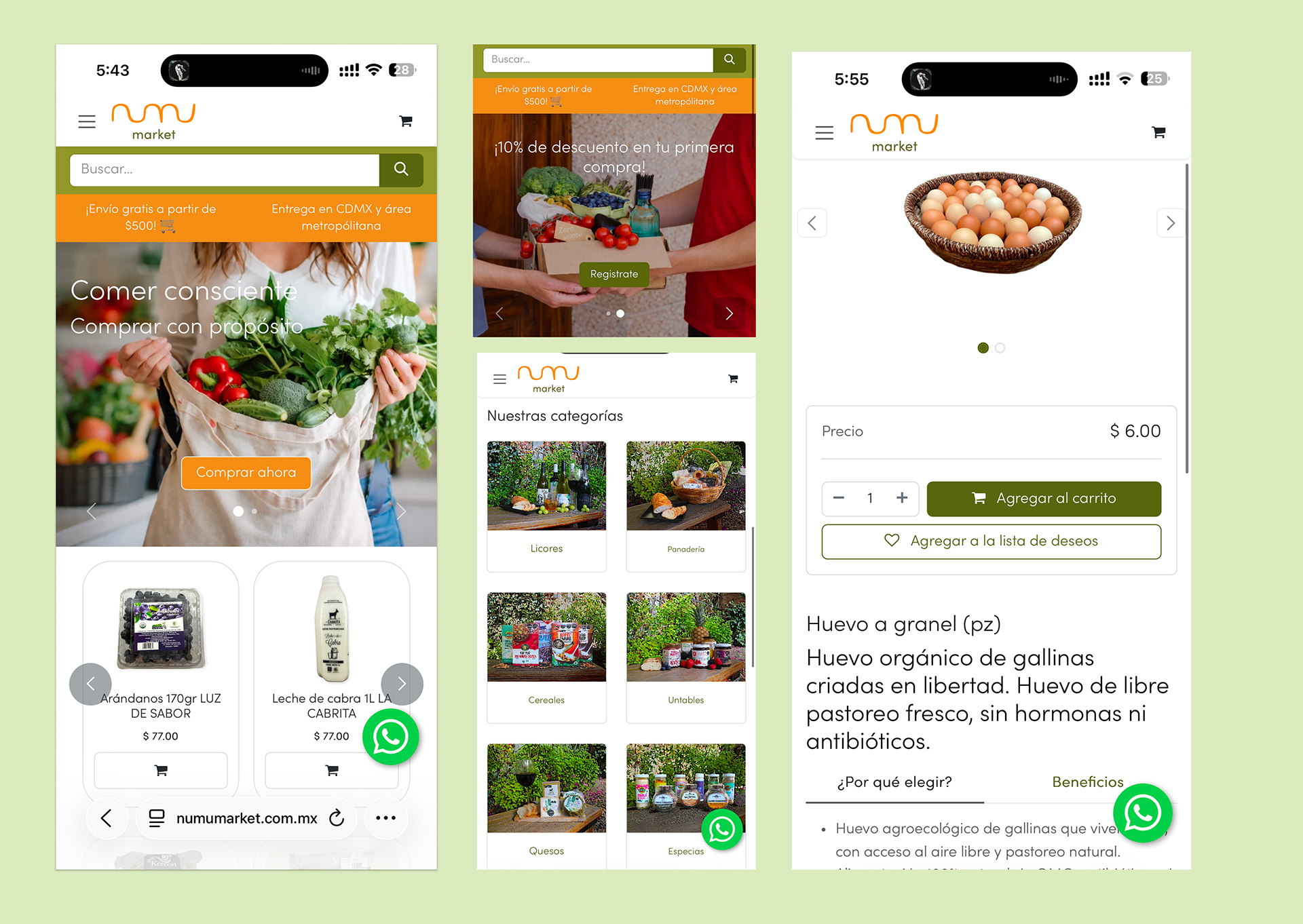
2. Ecommerce landing page after first Maze usability tests and first design iteration. (Mobile first approach was adopted for this redesign since more that 80% of users access the internet through their smartphones)
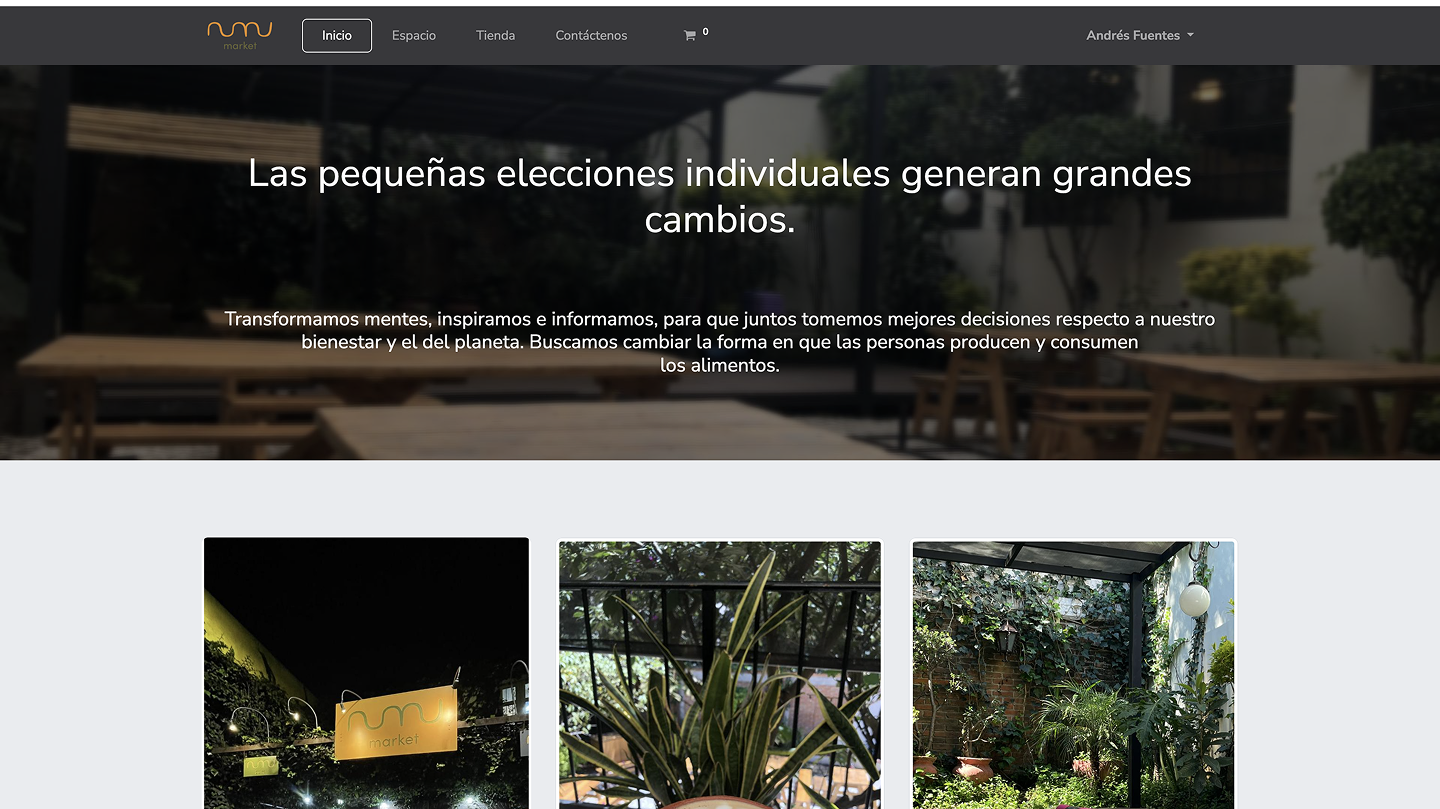
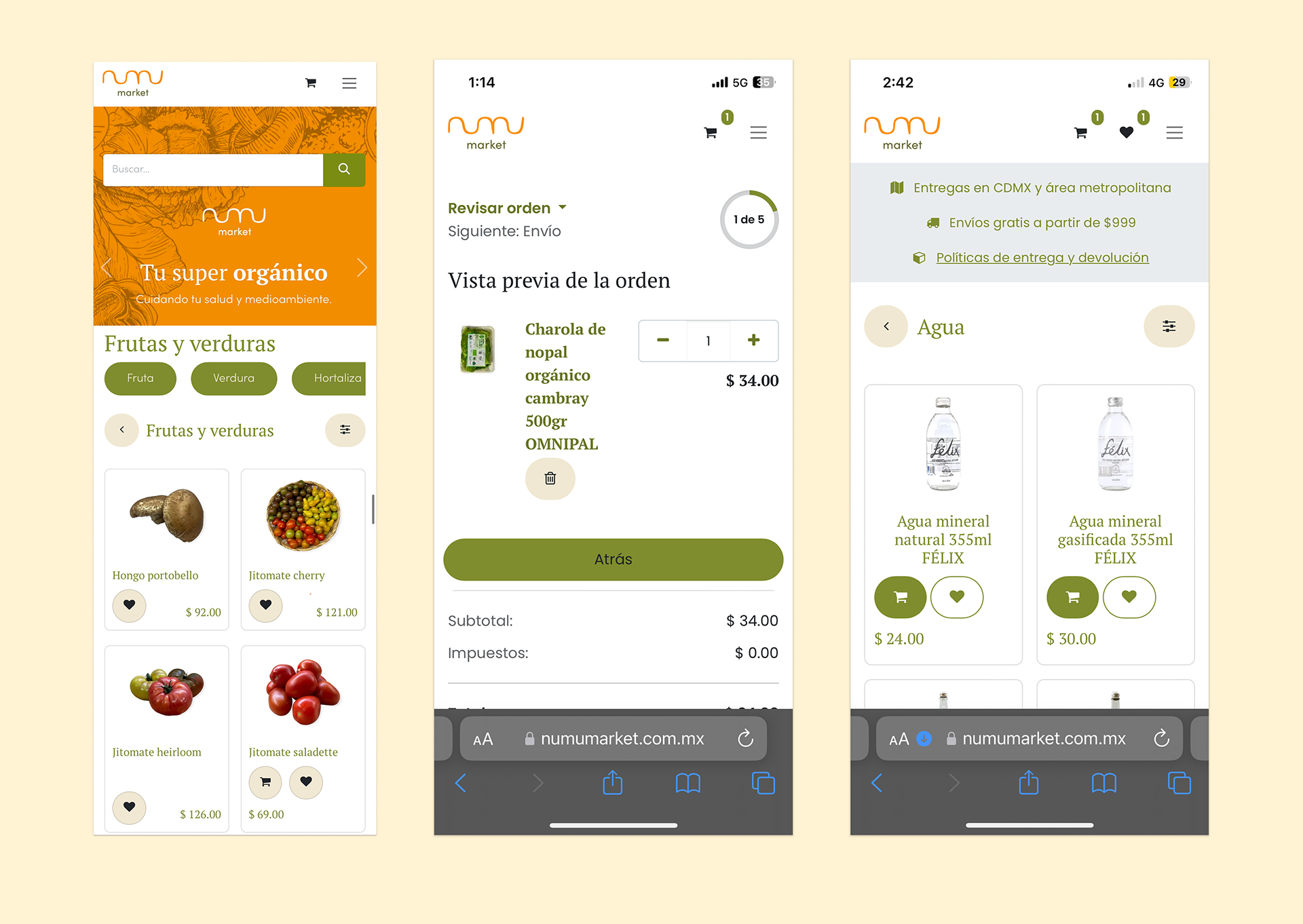
3. Most recent design iteration after the results of the user research results and redesign strategy stemming from the findings in this case study. The two guiding principles for the ongoing design improvements are conversion incentivizing features and brand values communication.
Constraints & Trade-offs
• Early-stage startup with limited resources
• E-commerce tied to Odoo ERP limitations
• Multiple initiatives running in parallel (SEO, Google Ads, operations)
Key Trade-off:
We prioritized identifying the highest-leverage blockers rather than redesigning the entire site, focusing on changes that could move the needle quickly and sustainably.

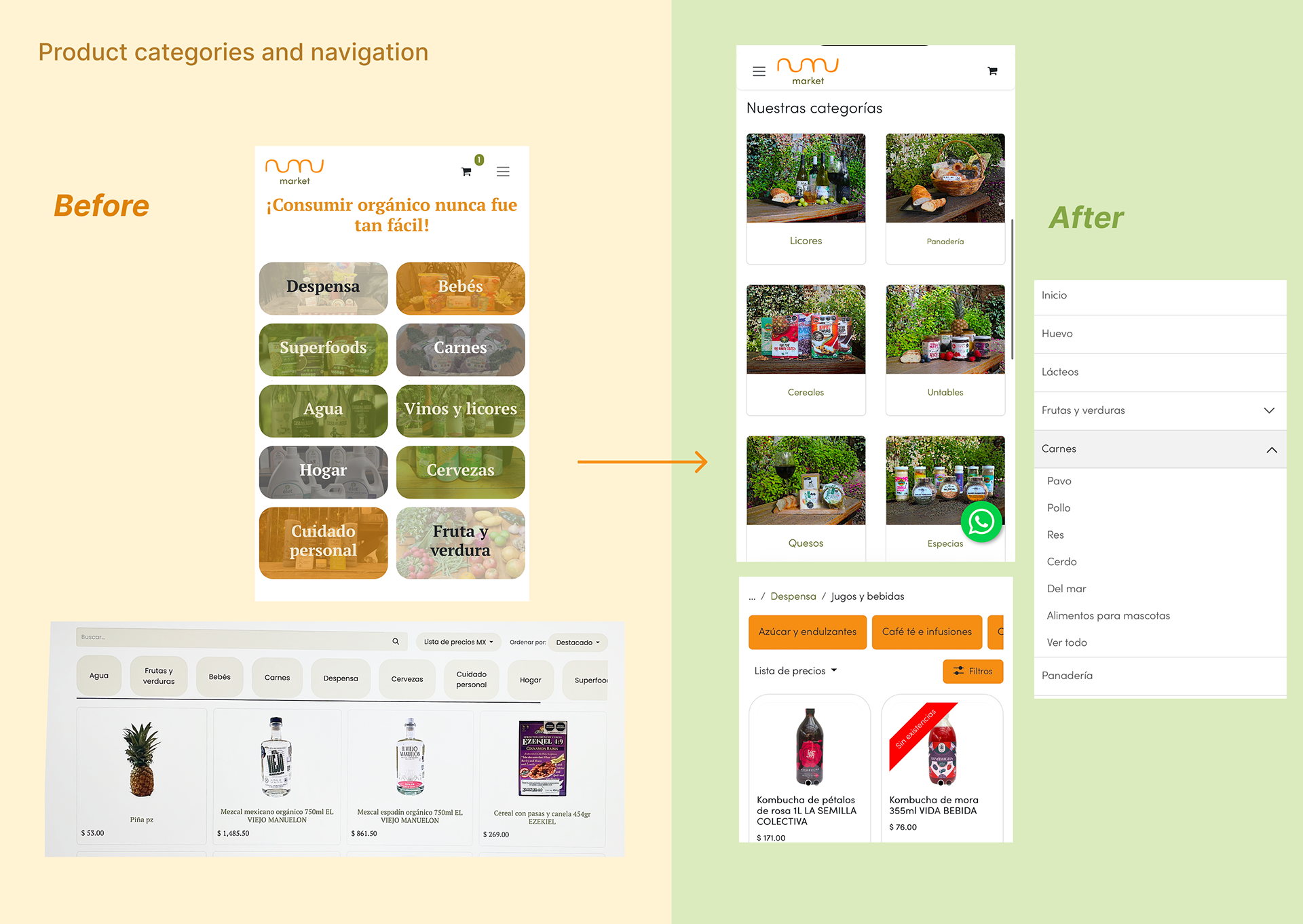
One important aspect of the redesign strategy was pinpointing high impact-low leverage points to improve throughout the user flow. Product findability was an important friction point detected during testing, which is being enhanced through better categorization and searchability features.

Initial Hypotheses
Through discussions across business, operations, and marketing, we identified two non-mutually exclusive hypotheses explaining the lack of conversions:
1. Cost & product offer disconnect
Customers did not perceive sufficient value or clarity in the online offering.
2. Poor user experience
Navigation and flow friction made it difficult to complete an order.
At the same time, we questioned whether traffic coming from SEO and Google Ads was reaching the right audience, further complicating the problem.
Research Strategy 
Given the multifactorial nature of the issue, we needed validation from real users to identify the primary blockers.
Before user research, I conducted a heuristic evaluation of the site to identify preliminary usability issues. However, internal analysis alone was insufficient. We needed to understand which problems actually prevented users from converting.
Methods used: 
1. Remote usability testing (Maze)
-Goal: Identify flow-breaking usability issues
-Rationale: Affordable, fast, and scalable for a startup environment
-Format: Moderated remote testing with 15 real users
2. In-person focus group with existing Numu customers who shopped in-store but not online
-Goal: Understand perceptions of pricing, product offering, and online value proposition
-Rationale: Capture qualitative insights and mental models from known customers
-Format: Focus group consisting of 10 users. Divided first segment where users completed a simulated checkout flow in the e-commerce site and then completed a segment where questions where asked about their experience and their perception. 
This dual approach allowed us to test both hypotheses simultaneously. Each method addressed a different dimension of the problem.

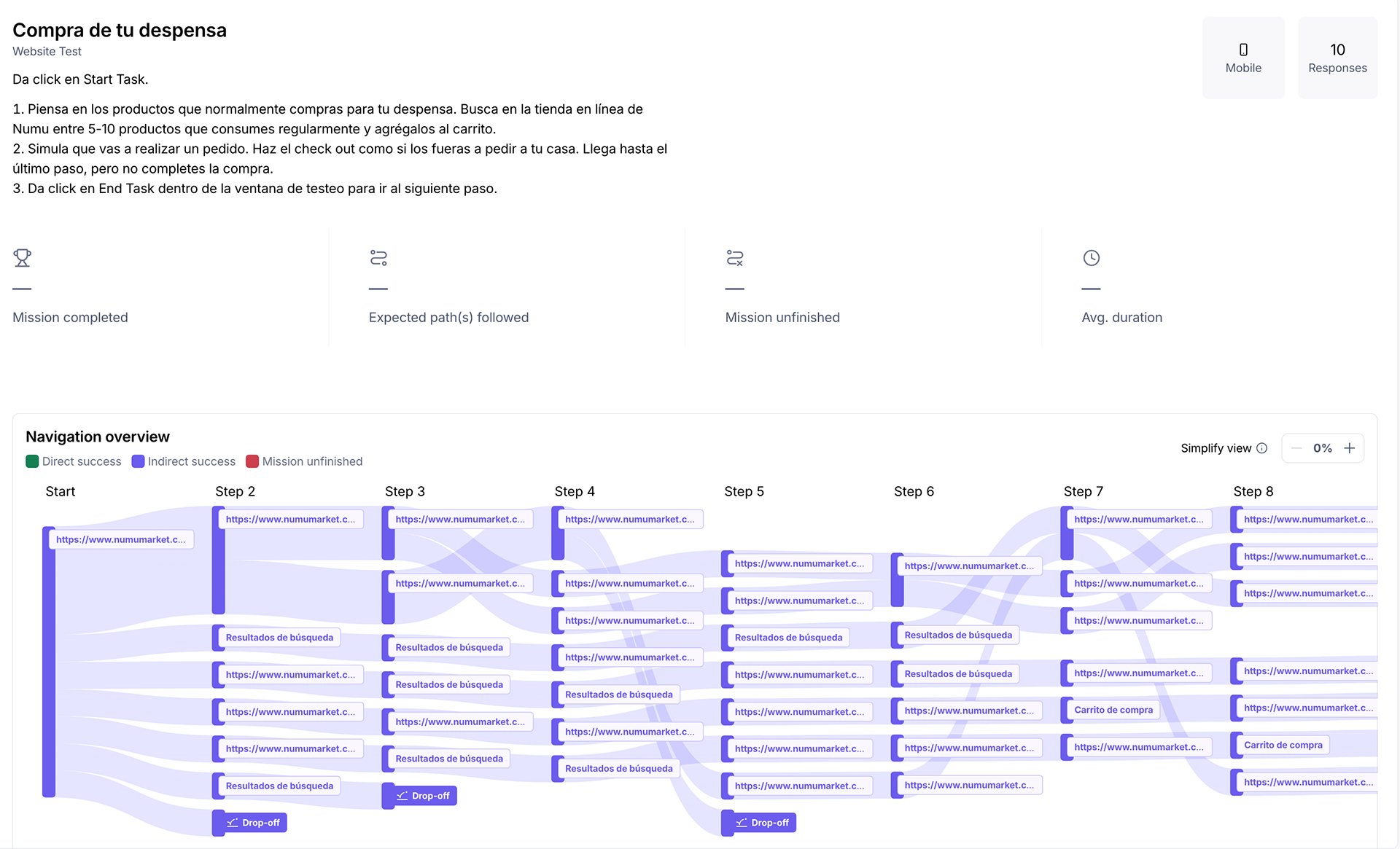
Remote usability testing was conducted through Maze, testing the main user stories involved in finding products in this ecommerce platform. The main flows tested were finding specific products, adding them to cart and finalizing the check out process.
Usability testing 
What we tested:
• Core purchase flow from product selection to checkout completion
• Navigation clarity across categories and product pages
• User understanding of pricing, value, and product availability
• Testing focused specifically on flow-breaking moments rather than overall aesthetics, in order to isolate the highest-impact usability issues.
Key findings:
• Users abandoned the flow earlier than expected, often before reaching checkout
• Several issues identified in the heuristic evaluation proved to be less impactful than anticipated once observed with real users
• Users who were already loyal in-store customers still experienced uncertainty and friction online, highlighting a gap between the physical and digital experience
What changed as a result
• Prioritized fixing navigation and flow clarity over secondary UI improvements
• Simplified decision points that caused hesitation or confusion
• Reallocated effort away from low-impact issues toward changes that directly supported order completion
• This validation step allowed the team to move forward with confidence, ensuring that improvements were evidence-based, scoped appropriately for an MVP, and aligned with business goals.
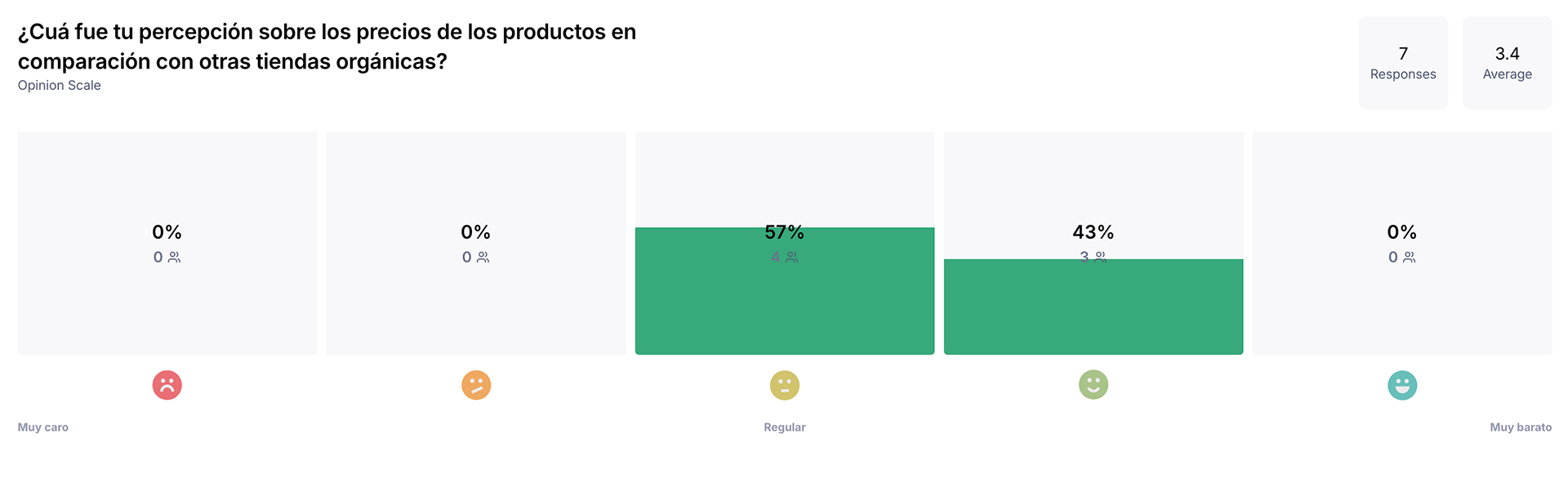
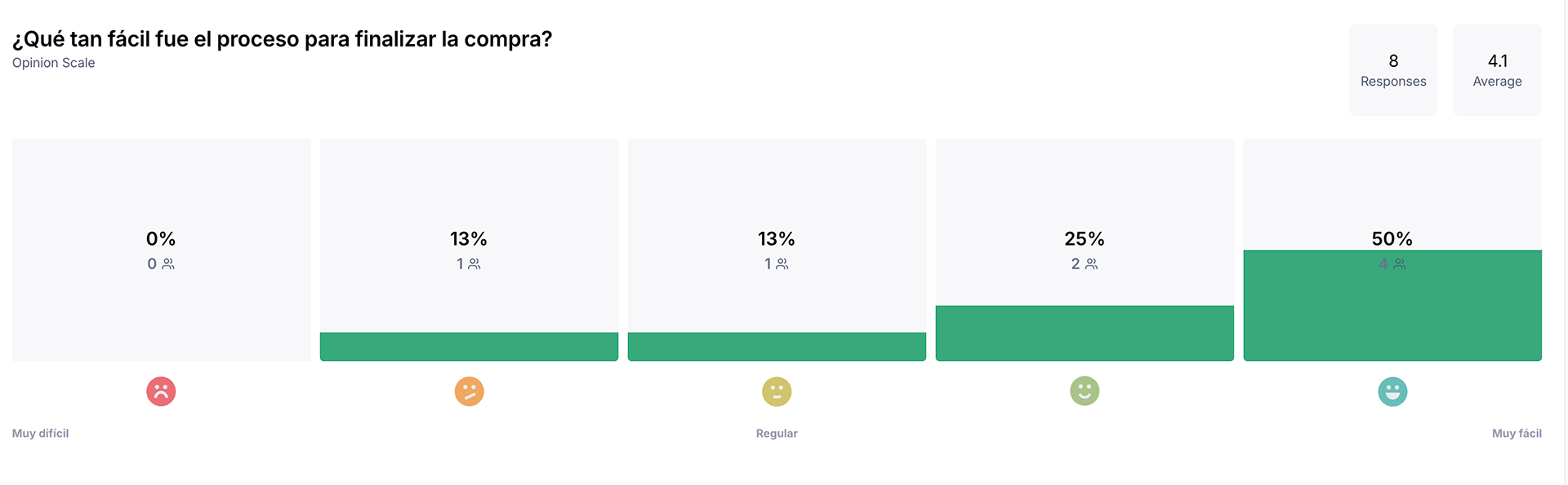
This image shows results from two key testing questions:
1. ¿What was your perception on the prices compared to other organic food stores?
2. ¿How easy was it to complete your purchase?
Key insights & decisions
What we learned:
• Usability issues created friction that discouraged order completion
• Users struggled with navigation clarity and confidence in the purchase process
• Perceived value and product clarity were not sufficiently communicated online. Consumers of these products understand that the price label might be higher, but that they are paying to reduce the toll regular products might take on their health, local economy and environmental impact.
Design and product decisions:
• Focus improvements on flow clarity and friction reduction
• Address the most critical usability issues identified in testing
• Align online product presentation more closely with in-store expectations and communicate value of choosing organic, local commerce more effusively
• Rather than broad changes, we targeted specific leverage points validated by research.

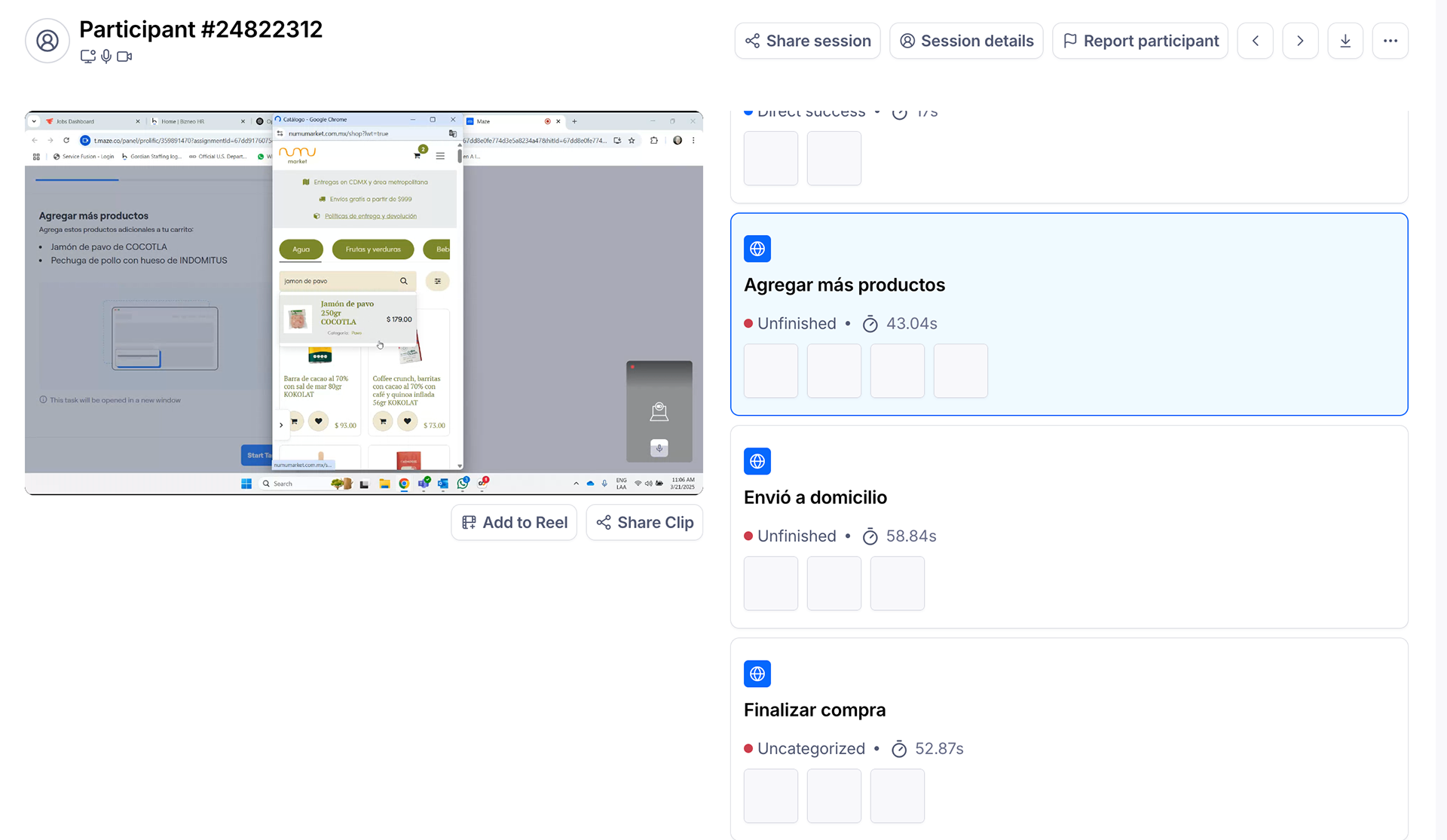
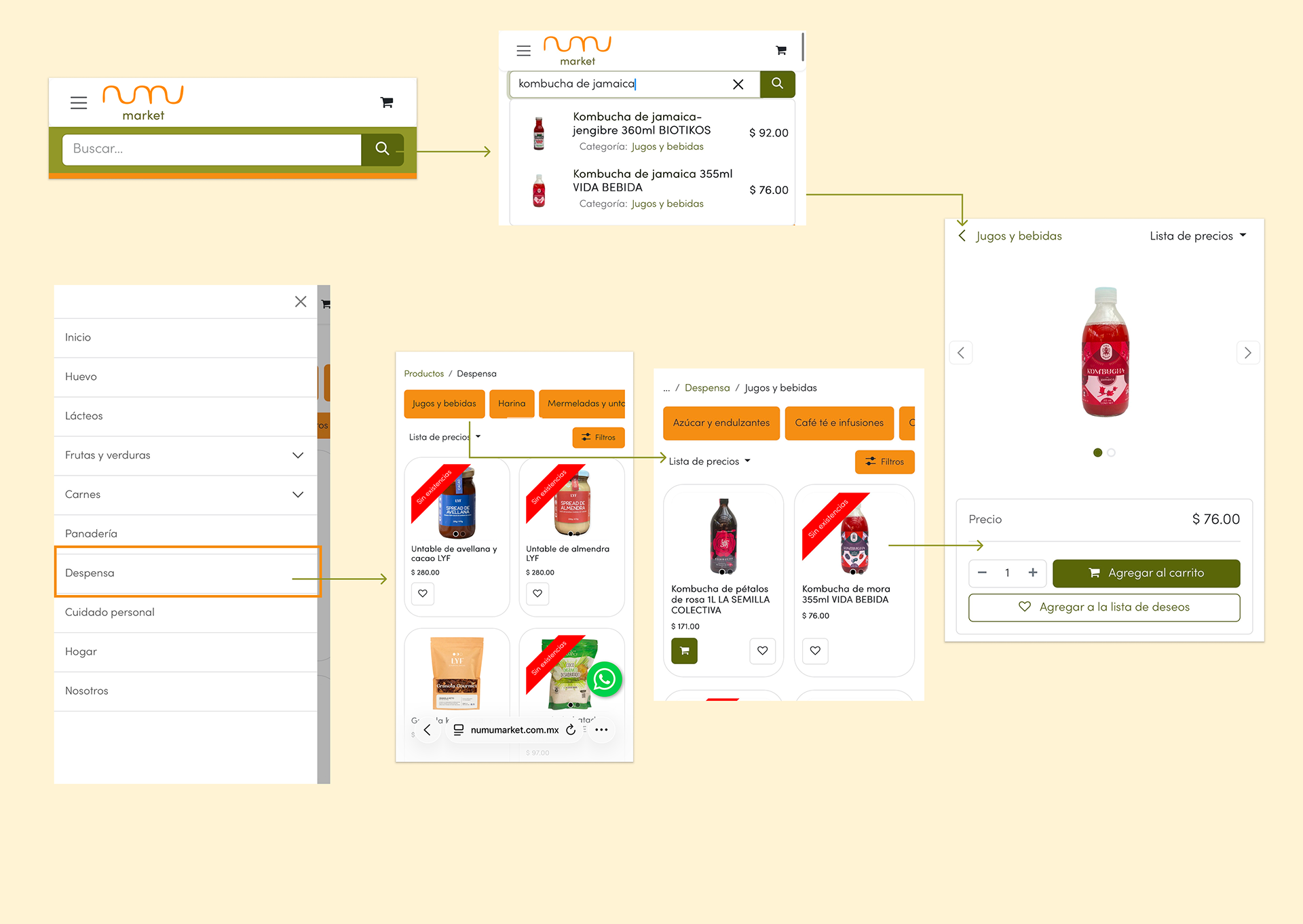
Results from Maze usability testing showing navigation overview of test subjects.
Outcome & Impact
Quantitative impact:
+219% increase in online sales in the month following implementation
Qualitative Impact:
• Clear validation of usability testing as a driver of revenue impact
• Improved internal understanding of how UX decisions affect business outcomes
• Focused messaging strategy to capture potential clients who fit buyer persona profile 
Organizational impact: 
• Helped foster a culture of continuous improvement
• Reinforced the value of validating assumptions with real users before investing resources

A main priority for redesign was making navigation and searchability of products smoother. This involved implementing ecommerce UX best practices and optimizing products for SEO.

Takeaways & Reflection
This project highlighted how, especially in early-stage startups, UX research is not a nice-to-have, but rather what allows efforts and resources to be focused on what will actually generates business impact. By validating hypotheses quickly and affordably, we were able to focus efforts where they mattered most, accelerating improvement and directly driving sales.
What I'd do differently:
For future phases, recruiting for focus groups needs to be more intentionally structured. While the sessions generated valuable insights about the Numu user persona, the research would have been more effective if participants had been potential online customers rather than existing in-store shoppers.
Because these users were already converted through the physical store, their shopping behaviors and expectations differed from those of online-first customers. Although we were able to capture why some users might choose competitors and clearly identify the primary reasons they purchase at Numu, these findings, valuable as they were in further understanding our buyer persona, deviated from the original objective of the focus group. As a result, the session gradually shifted from validating e-commerce conversion hypotheses to serving a different research purpose. 
This limitation was largely driven by time and resource constraints, which led the recruiting team to rely on an existing customer database. Although this approach accelerated execution, it reduced the precision of the findings relative to our conversion goals, as we gathered indirect insights rather than direct validation of the primary hypothesis we set out to test.
In later stages of this e-commerce CRO initiative, this gap will be addressed by implementing more targeted recruitment strategies, ensuring research is conducted with users we aim to convert, rather than those already convinced by Numu's value proposition.
Back to Top